
ZIP 33156
North Pinecrest
Near Pinecrest Gardens, North Pinecrest
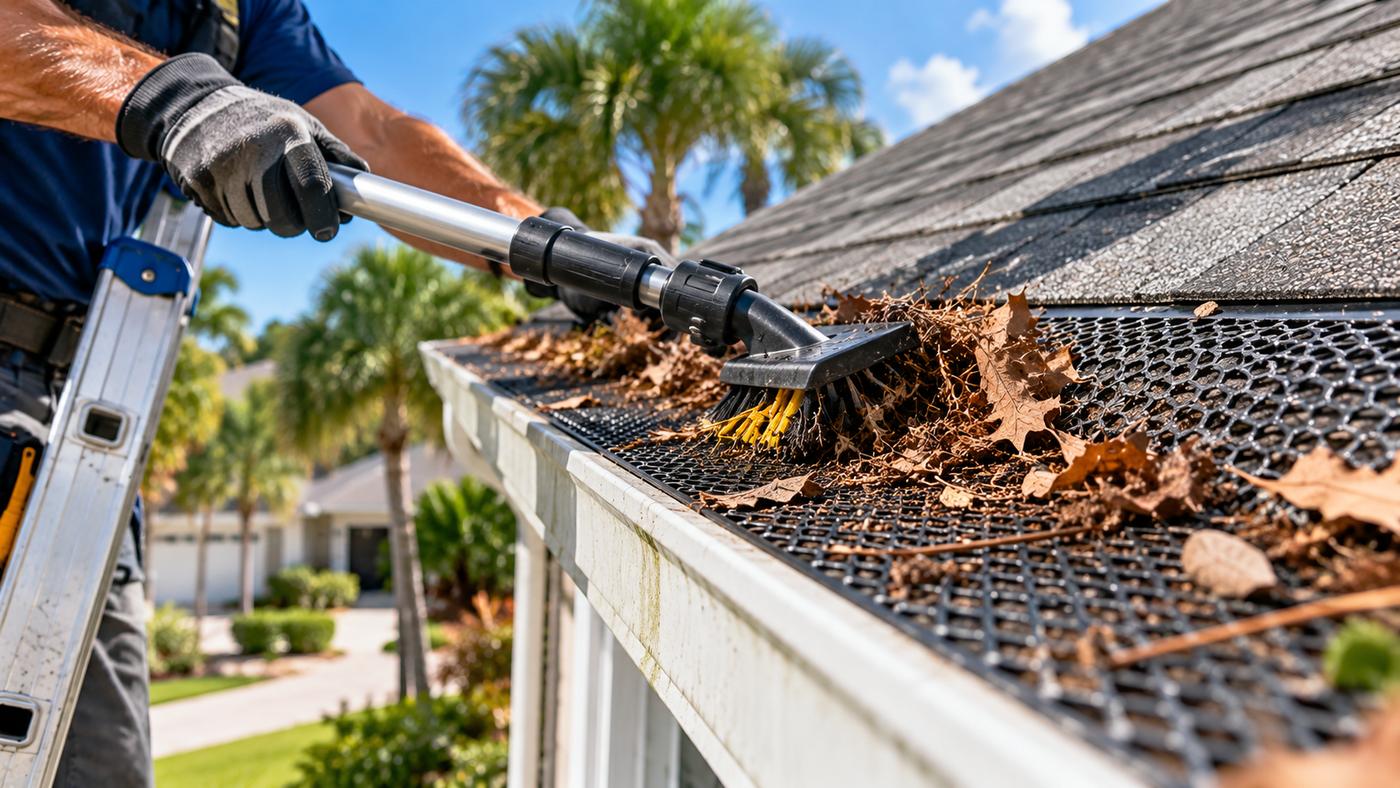
See ZIP 33156Gutter guard cleaning means cleaning the guard or screen on top of your gutter and clearing the trough underneath it. Guards stop leaves. Pollen, seed pods, and roof grit pile on top or slip through, so most guards still clog. Fast Pro cleans the guard, clears the trough, and flushes the downspouts.
ZIP codes we serve in Pinecrest
Serving Pinecrest, FL homeowners. 6+ years of experience. 350+ jobs completed. Last updated .

Every guard cleaning includes
Free inspectionGuards on Pinecrest homes still fill with leaf litter and seed pods from the village's mature canopy. We clean the guard surface and clear the trough beneath it on every size of lot.
Gutter guards on Pinecrest homes face a heavier debris load than guards almost anywhere else in Miami-Dade, simply because the canopy above them is older and denser. Leaves, seed pods, and fine debris from decades-old shade trees still find their way onto the guard surface or underneath it, even where the guard is doing its job.
Sections that release easily, without stressing the frame, get lifted, their surface brushed and rinsed, and the trough beneath them cleared out by hand. On a Pinecrest estate, that often means more linear feet of guard to work through than a standard lot, and we plan the visit accordingly rather than quoting it like a smaller property.
Guards near a canal or under especially heavy shade may need checking more often than the village average, since both humidity and debris load run higher in those spots.
On the largest Pinecrest lots, a guard section on the far side of the house can go unnoticed longer simply because it's farther from the driveway, so we walk the full roofline rather than checking only what's visible from the street.
Yes. Guards change what lands in the trough and how often you have to deal with it. They do not end the job.
A guard works like a lid. It keeps big debris out, and water has to pass through or around it. Whatever the lid cannot pass stays on top, and whatever it lets through settles underneath. Pollen, seed pods, and roof grit are the usual culprits.
| Guard type | Blocks well | What gets through or piles up | How we clean it |
|---|---|---|---|
| Micro-mesh | Needles, seed pods, most roof grit | Wet pollen can film the surface and slow the water | Brushed and rinsed on top, trough flushed through the mesh or from the end |
| Screen or perforated | Large leaves | Needles, pollen, and grit pass through and settle underneath | Lifted where possible, cleaned, trough cleared by hand |
| Reverse-curve (surface tension) | Leaves and large debris | Fine debris can collect at the nose opening | Opening cleared and rinsed, trough checked and flushed |
| Foam inserts | Large debris, at first | Seeds sprout in the foam and debris embeds in the pores | Pulled and rinsed, or replaced if clogged through |
| Brush inserts | Large debris | Debris tangles in the bristles and holds water | Pulled out and shaken clean, trough cleared by hand |
We clean the guards that are already on your house. If you are weighing guards for a house that has none, tell us what falls on your roof first. The right guard depends on it. The gutter cleaning page lists what we pull out of an unguarded trough.
The steps change with the guard, so we start by finding out how yours is attached.
We look at the type, the material, and how it attaches. Some guards slide out, some hinge up, some are screwed down, and some tuck under the first row of roofing.
Sections that come up cleanly get lifted and set aside. We do not force a guard that is screwed or tucked, because bent frames leave gaps where debris gets in.
Surface debris comes off with a soft brush, and the guard is rinsed on both sides so the openings are clear.
This is where the pollen paste, seed pods, and roof grit have collected. We scoop it out and bag it, the same as on an unguarded gutter.
Water runs through each run and each downspout until the flow is steady. A guard does not stop a blockage at the elbow.
Each guard goes back flat against the roof edge and the gutter lip. A gap or a lifted corner lets debris in on the next storm.
You see the guard and the trough before and after, plus a plain note on any bent, cracked, or missing sections.
Pollen and fine debris sit on top of the guard, so we clean the surface before we reach the trough.
The same section of gutter, photographed from the same spot before and after.
Pick your ZIP code to see the neighborhoods we cover, or call and we will confirm your street.
North Pinecrest
Near Pinecrest Gardens, North Pinecrest
See ZIP 33156South Pinecrest
South Pinecrest, Old Cutler Road corridor
See ZIP 33157Northeast Pinecrest
Border with South Miami
See ZIP 33143West Pinecrest
West Pinecrest
See ZIP 33176Not sure we cover your ZIP code? Call us at (813) 856-2726.
It depends on the feet of gutter, the number of stories, and how much canopy is over the roof. Larger lots with heavier tree cover usually run more than a standard suburban lot. Give us your address and a sense of the lot size, and we'll have a price for you on the call.
Early May is the one to prioritize, since it comes right before the wet season starts. A second visit sometime between October and December, once hurricane season has wound down, covers the rest of the year.
Cleaning itself doesn't require a permit. If branches need trimming to reach the roofline safely, we work within the same canopy-protection standards the village applies to any tree work.
Often, since a larger lot usually means more roofline and more gutter to clear, and a heavier canopy adds debris on top of that.
We cover the village end to end, from the estates near Pinecrest Gardens to the canal-adjacent lots toward the southern boundary.
The extra humidity near a canal can add to algae and mildew pressure, which we factor into how often we'd recommend a visit.
Often, yes, both because the roofing and gutters are older and because the canopy above them has had longer to mature.
Yes. We plan the ladder setup and debris handling around pools, patios, and landscaping on every visit, not just on the largest estates.
They help, but the volume of leaves and seed pods here means guards still need regular cleaning, often more than once a year.
Usually, yes. More roofline under a heavier canopy means more linear feet of guard collecting debris.
Not a different type, usually, just more of it. More roofline under heavier canopy means more guard surface to check and clean.
Call and tell us what guard you have and what you see on top. We quote by phone and find a day that works.
Call (813) 856-2726